


Phytochemical study, antioxidant activity, and molecular docking analysis of sterols from Calotropis gigantea leaves
- Faculty of Traditional Medicine, University of Medicine and Pharmacy at Ho Chi Minh City, Vietnam
Abstract
Introduction: Calotropis gigantea (L.) R. Br. ex Schult. has long been used in traditional medicine for the management of inflammatory disorders and conditions associated with oxidative stress. Previous studies have reported that this species contains diverse secondary metabolites with promising biological activities; however, the phytochemical profile of leaf extracts prepared with different solvent polarities and the potential antioxidant mechanisms of their major constituents remain insufficiently characterized.
Objective: This study aimed to investigate the phytochemical composition, antioxidant and antibacterial activities of aqueous and ethanolic leaf extracts of C. gigantea, isolate major bioactive constituents from the most active extract, and explore their potential antioxidant-related mechanisms through molecular docking analysis.
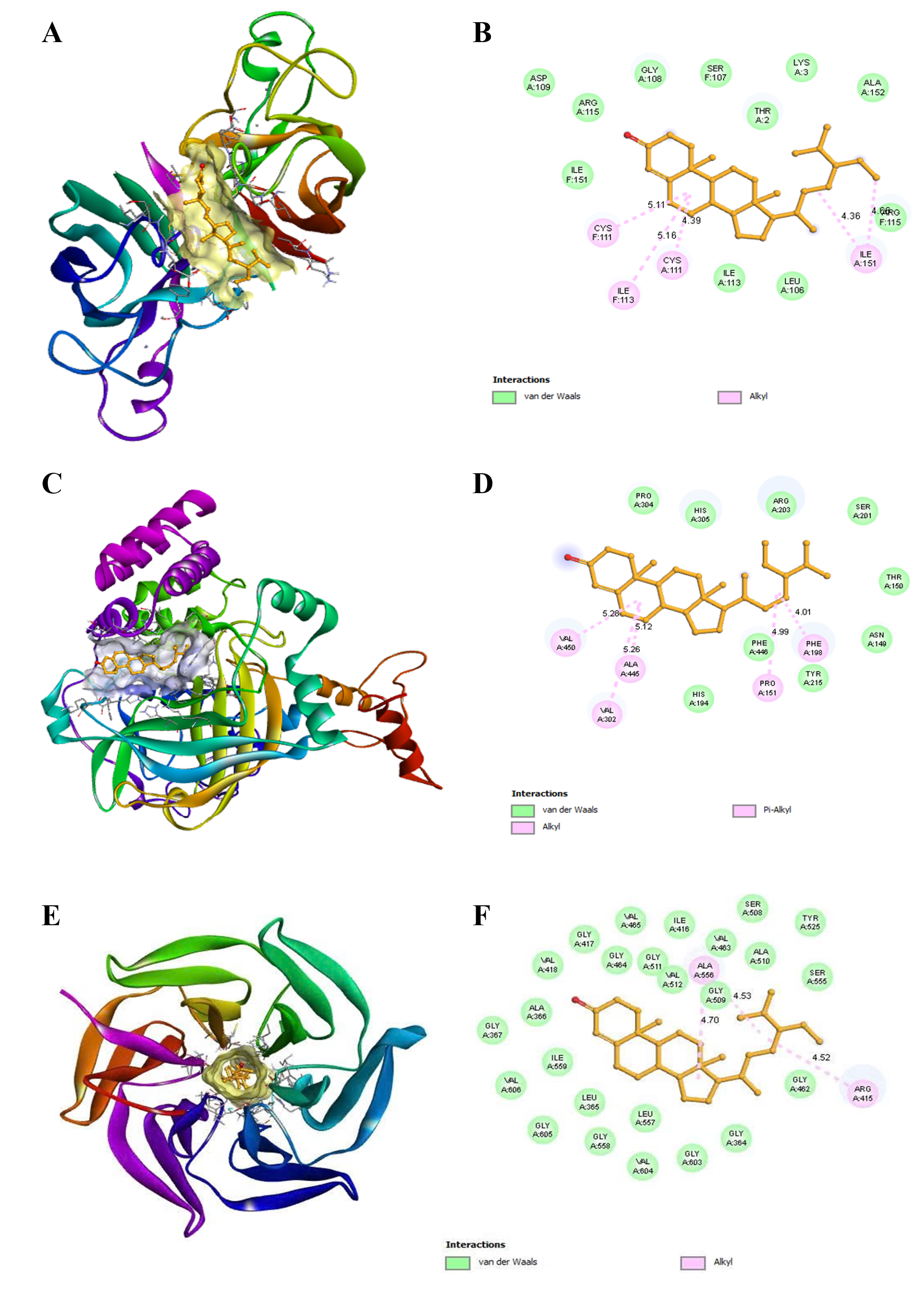
Methods: Leaves of C. gigantea were extracted using water and ethanol (40%, 70%, and 96%). Preliminary phytochemical screening was performed using standard qualitative assays. Antioxidant activity was evaluated by DPPH and ABTS radical scavenging assays, while antibacterial activity was assessed against seven bacterial strains using the agar well diffusion method. The extract showing the highest antioxidant activity was subjected to chromatographic fractionation, and isolated compounds were identified by 1H-NMR spectroscopy. Molecular docking was conducted to evaluate the interactions of the isolated compounds with antioxidant-related targets, including superoxide dismutase 1 (SOD1), catalase (CAT), and Kelch-like ECH-associated protein 1 (Keap1).
Results: Phytochemical screening revealed the presence of alkaloids, phenolic compounds, flavonoids, coumarins, sterols, terpenoids, reducing sugars, and saponins, with ethanolic extracts containing higher levels of phenolic and terpenoid constituents than the aqueous extract. Among the tested samples, the 70% ethanol extract exhibited the strongest antioxidant activity, reaching 86.31 ± 1.10% DPPH radical scavenging at 1000 μg/mL and 44.54 ± 0.87% ABTS radical scavenging at 100 μg/mL. No antibacterial activity was observed for any extract under the experimental conditions. Phytochemical investigation of the most active extract resulted in the isolation of β-sitosterol (1) and β-sitostenone (2). Molecular docking demonstrated favorable binding of both sterols to SOD1, CAT, and especially Keap1, with β-sitostenone exhibiting the strongest predicted binding affinity (−10.3 kcal/mol) toward Keap1.
Conclusions: The findings suggest that 70% ethanol is the most suitable solvent for extracting antioxidant-associated phytochemicals from C. gigantea leaves. The isolation of β-sitosterol and β-sitostenone, together with their favorable interactions with antioxidant-related targets, particularly Keap1, suggests that these sterols may contribute to the antioxidant activity of C. gigantea through modulation of the Keap1/Nrf2 signaling pathway. These results provide a scientific basis for further mechanistic and in vivo studies to support the development of C. gigantea-derived antioxidant agents.