


Quality of life and associated factors in outpatients receiving oral anticoagulants: a cross-sectional study at a national hospital in Vietnam
- Faculty of Pharmacy, University of Health Sciences, Vietnam National University Ho Chi Minh City, YA1 Administrative Building, Hai Thuong Lan Ong Street, VNU-HCM Urban Area, Dong Hoa Ward, Ho Chi Minh City, Vietnam
- Department of Pharmacy, Thong Nhat Hospital, 1 Ly Thuong Kiet Street, Tan Son Nhat Ward, Ho Chi Minh City, Vietnam
- School of Pharmacy, University of Medicine and Pharmacy at HCMC, 217 Hong Bang, Cho Lon Ward, Ho Chi Minh City, Vietnam
Abstract
Objectives: Long-term oral anticoagulant therapy may affect patients’ quality of life (QoL), particularly in older adults. This study aimed to evaluate the QoL and identify factors associated with QoL scores among outpatients receiving oral anticoagulants at Thong Nhat Hospital in Vietnam.
Methods: We conducted a cross-sectional study from January to March 2025 at Thong Nhat Hospital. Adult outpatients treated with vitamin K antagonists (VKAs) or direct oral anticoagulants (DOACs) were recruited. We assessed QoL score using the validated Vietnamese version of the EuroQol 5-Dimension 5-Level (EQ-5D-5L). Demographic, clinical, and medication-related data were obtained through patient interviews and reviewing medical records. Multiple linear regression was conducted to identify factors independently associated with QoL.
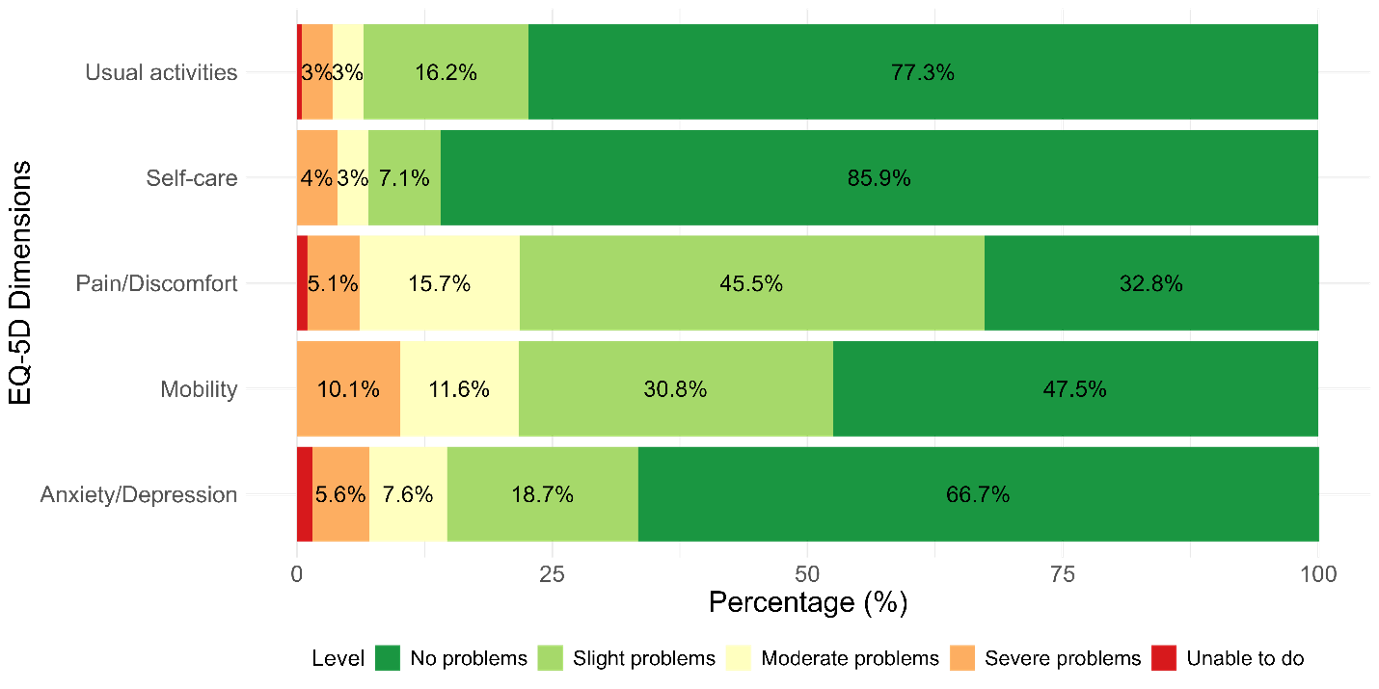
Results: Among 198 participants, the median age was 69.5 years (IQR: 63–78) and 62.6% were male. Most patients received DOACs (n = 165), while 33 received VKAs. Atrial fibrillation was the most common indication (89.4%). The mean EQ-5D-5L score was 0.81 ± 0.19. Problems were most frequently reported in pain/discomfort (67.2%) and mobility (52.5%). The mean EQ-5D-5L score did not differ significantly between patients receiving VKA and those receiving DOAC (0.85 ± 0.18 vs. 0.80 ± 0.19; p = 0.18). Female sex (β = −0.06; p = 0.02), non-participation in household activities (β = −0.14; p < 0.01), and polypharmacy (β = −0.06; p = 0.02) were independently associated with lower QoL scores. A non-vegetarian diet was associated with better QoL scores (β = 0.10; p = 0.03).
Conclusions: Outpatients in Vietnam receiving oral anticoagulants have lower mean EQ-5D scores than the general population. QoL was associated with sex, engagement in household activities, dietary pattern, and polypharmacy. Our findings highlight the need for patient-centred management strategies to improve health-related QoL in this population.