


Investigation of antibiotic prophylaxis use in orthopedic trauma surgery at Thu Duc General Hospital
- University of Health Sciences, Viet Nam National University Ho Chi Minh City
- Thu Duc General Hospital
Abstract
Introduction: Antibiotic prophylaxis (AP) is an important measure to prevent surgical site infection (SSI) in orthopedic surgery. Inappropriate use of AP can lead to an increased risk of side effects, antibiotic resistance, and higher treatment costs.
Objective: To investigate the use of AP in orthopedic trauma surgeries, assess the appropriateness of AP, and identify factors associated with the appropriateness.
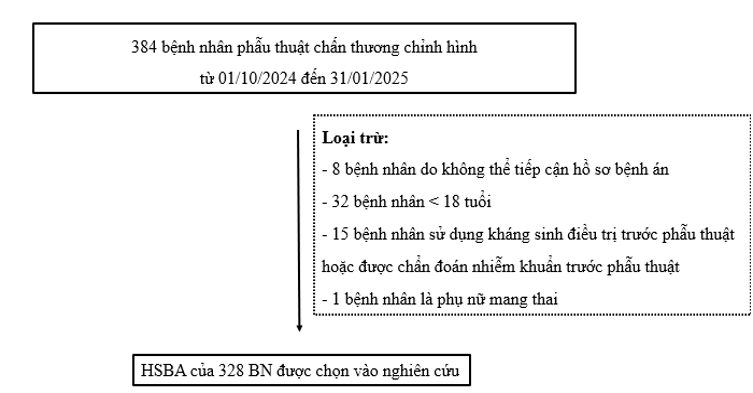
Materials and Methods: A cross-sectional descriptive study was conducted on patients undergoing orthopedic trauma surgery at Thu Duc General Hospital from October 1, 2024, to January 31, 2025.
Results: The rate of patients prescribed AP was 83.2%. Cefazolin was the most commonly used prophylactic antibiotic in this study (38.1%). The overall appropriateness rate of AP use was 33.2%, with the highest appropriateness rates observed for route of administration, timing of use, and re-dosing (100%), while the choice of antibiotic had the lowest appropriateness rate (38.5%). Factors associated with the overall appropriateness of AP use included gender (OR = 2.204; 95% CI: 1.236–3.929), BMI (OR = 2.378; 95% CI: 1.222–4.630), surgery duration (OR = 0.361; 95% CI: 0.181–0.719), surgical site (OR = 2.691; 95% CI: 1.369–5.291), surgical method (OR = 5.569; 95% CI: 1.043–29.725), and length of hospital stay after surgery (OR = 2.734; 95% CI: 1.021–7.321).
Conclusion: The rate of appropriate AP use remains low. Therefore, it is necessary to strengthen the management of prophylactic antibiotic use in orthopedic surgery patients.