


Morphometric and Topographical Study of The inferior gluteal artery in Vietnamese Cadavers
- Department of Anatomy - Embryology, University of Health Sciences - Vietnam National University
Abstract
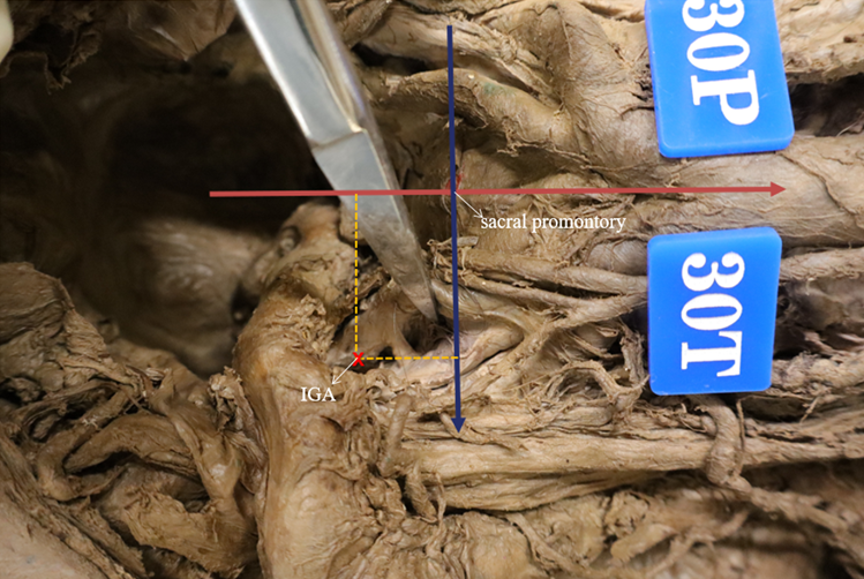
Objectives: The inferior gluteal artery (IGA) is a principal vascular structure supplying the gluteal region, with significant relevance in reconstructive and pelvic surgery. Despite its clinical importance, population-specific anatomical data in Vietnamese individuals remain limited. This study aimed to comprehensively evaluate the origin, vertebral levels, morphometric characteristics, and spatial distribution of the IGA in Vietnamese cadavers. Subjects and Methods: A descriptive cadaveric study was conducted on 30 hemipelves obtained from 15 formalin-fixed adult Vietnamese cadavers. Dissections were performed following a standardized anatomical protocol to ensure consistency. Recorded parameters included the arterial origin, vertebral levels of origin and pelvic exit, length, diameter, and spatial coordinates relative to the sacral promontory. Morphometric measurements were obtained using digital calipers and analyzed within a two-dimensional Cartesian coordinate system. Results: The IGA most frequently originated from the anterior division of the internal iliac artery (86.7%), whereas 13.3% arose from the posterior division. The predominant vertebral level of origin was S2–S3 (46.67%), followed by S3–S4 (26.67%). The most common pelvic exit level was S3–S4 (33.33%). The mean arterial length and diameter were 23.99 ± 8.93 mm and 5.22 ± 1.36 mm, respectively. No statistically significant differences were observed between the left and right sides, indicating marked bilateral symmetry. Spatial analysis demonstrated that arterial origins consistently clustered lateral and inferior to the sacral promontory. Conclusions: The IGA in Vietnamese cadavers exhibits a relatively consistent origin, predictable vertebral topography, and high bilateral symmetry. Its spatial relationship to the sacral promontory provides a reliable anatomical landmark for surgical orientation. These findings may contribute to improved preoperative planning and help reduce vascular complications in reconstructive and pelvic surgical procedures.